Cloud Computing
Cloud computing is the delivery of computing services like storage, servers, databases, and software over the internet on a pay-as-you-go basis.
Cloud computing is the delivery of computing services like storage, servers, databases, and software over the internet on a pay-as-you-go basis.
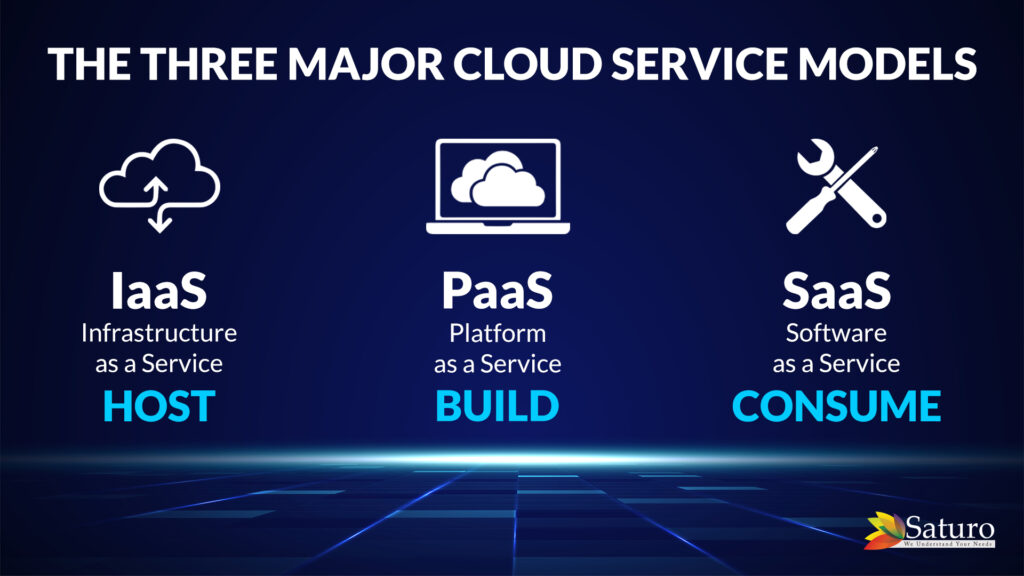
Cloud computing provides different service models to deliver computing resources over the internet. These models help businesses and individuals access IT resources on demand, reducing the need for physical infrastructure. The three main cloud service models are Infrastructure as a Service (IaaS), Platform as a Service (PaaS), and Software as a Service (SaaS).........
Click here for more information
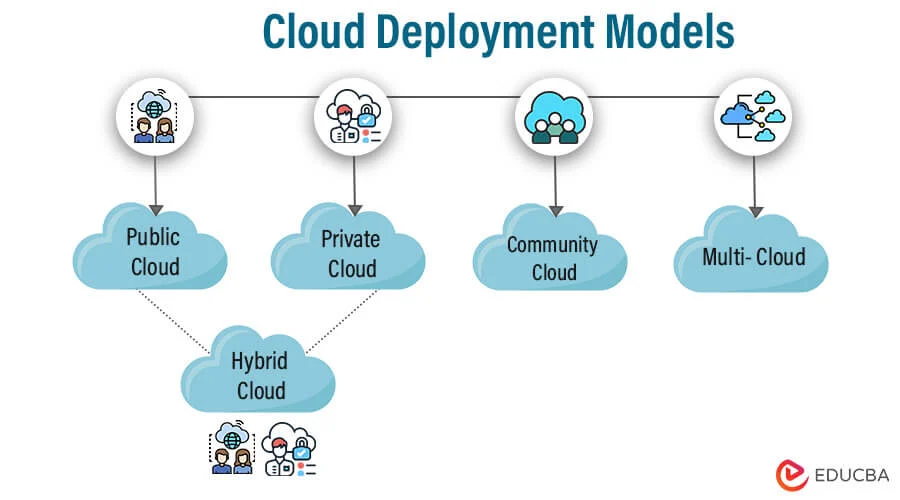
Cloud computing can be deployed in different ways based on the organization's needs, security requirements, and budget. The four main cloud deployment models are Public Cloud, Private Cloud, Hybrid Cloud, and Community Cloud. Each model offers unique advantages and is suited for specific use cases..
Cloud deployment models help businesses choose the right infrastructure based on security, cost, scalability, and compliance requirements. Organizations often adopt a mix of public, private, and hybrid cloud strategies to optimize their cloud computing capabilities...........
Click here for more information
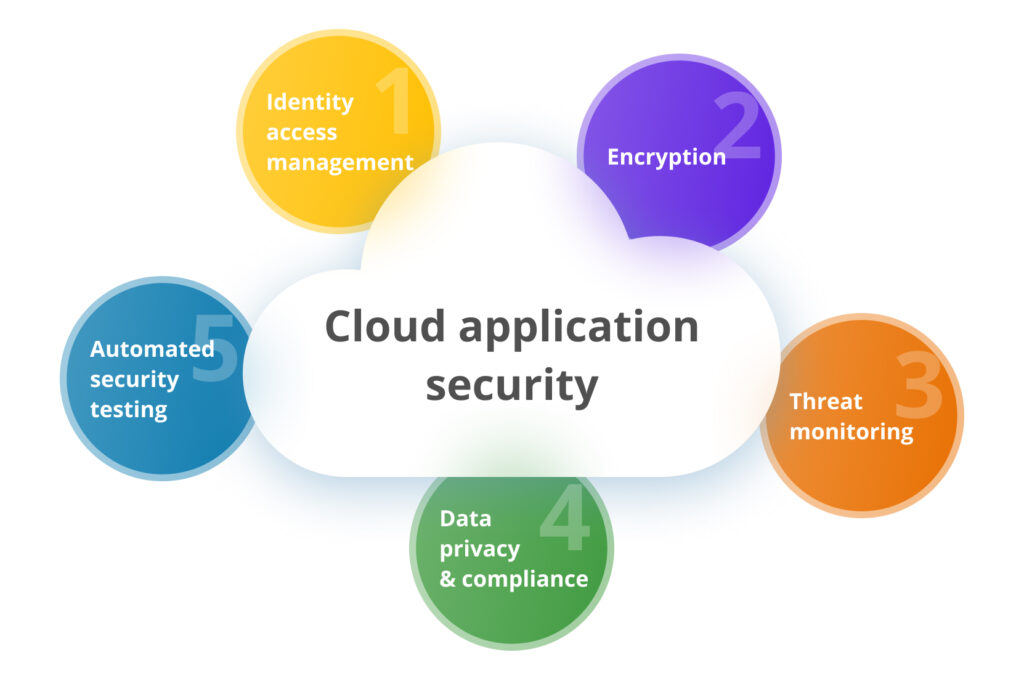
Cloud security refers to the combination of policies, technologies, and controls designed to protect data, applications, and infrastructure in cloud environments. With the increasing adoption of cloud computing, businesses face security concerns such as data breaches, unauthorized access, and compliance risks. To address these, cloud security incorporates multiple layers of protection, including data encryption, identity and access management (IAM), and network security measures like firewalls and intrusion detection systems. Ensuring compliance with industry regulations such as GDPR and HIPAA is also crucial for organizations operating in the cloud.
One of the biggest challenges in cloud security is the risk of data breaches and leaks due to misconfigurations or unauthorized access. Insider threats, DDoS attacks, and lack of visibility in multi-cloud environments further increase security vulnerabilities. To mitigate these risks, organizations must adopt best practices such as strong authentication using multi-factor authentication (MFA), implementing a zero-trust security model, and regularly performing security audits and compliance checks. Additionally, AI-driven threat monitoring and incident response systems can help detect and prevent potential attacks in real-time.
A robust cloud security strategy also involves backup and disaster recovery planning to ensure business continuity in case of cyber threats or system failures. Encrypting sensitive data both at rest and in transit adds an extra layer of protection against unauthorized access. As cloud adoption continues to grow, organizations must prioritize security measures and continuously update their defenses to stay ahead of evolving cyber threats............
Click here for more information
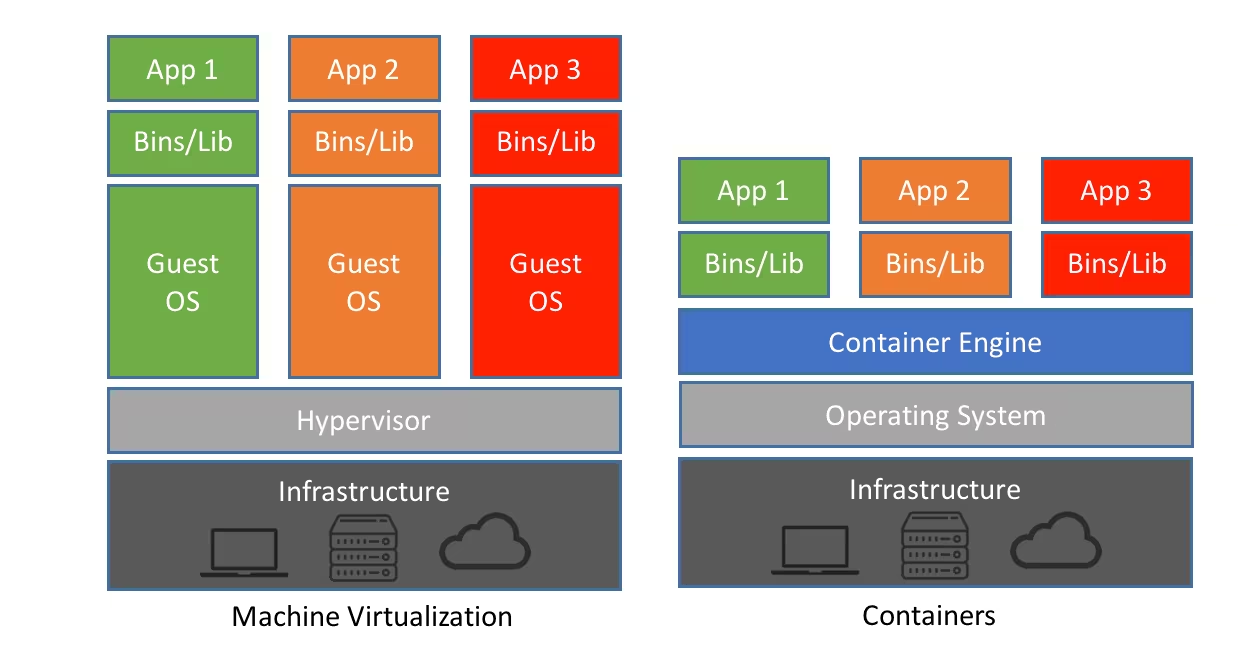
Cloud virtualization and containers are two essential technologies in cloud computing that enhance resource efficiency, scalability, and application deployment. Virtualization enables multiple virtual machines (VMs) to run on a single physical server using hypervisors like VMware, KVM, and Hyper-V. This optimizes hardware utilization, reduces costs, and improves disaster recovery by allowing easy backup and migration of virtual machines. On the other hand, containers provide a lightweight, portable way to package applications with all their dependencies, ensuring consistent performance across different environments. Unlike VMs, containers share the host operating system, making them more efficient and faster to deploy.
Virtualization is widely used in cloud environments for running multiple operating systems on shared infrastructure, ensuring better resource allocation and flexibility. It allows businesses to scale computing resources up or down based on demand, improving overall IT efficiency. Meanwhile, containers have gained popularity due to their ability to support microservices architectures, where applications are broken into smaller, independent services. This approach enhances scalability, facilitates continuous integration/continuous deployment (CI/CD), and makes application management more efficient in cloud environments.
IWhile both virtualization and containers serve different purposes, they can be used together for optimal performance. Virtual machines offer full isolation and security, making them suitable for multi-tenant environments, whereas containers enable rapid deployment and scalability, making them ideal for modern cloud-native applications. Many organizations combine both technologies—running containers on virtualized infrastructure—to maximize performance, security, and flexibility in cloud computing............
Click here for more information
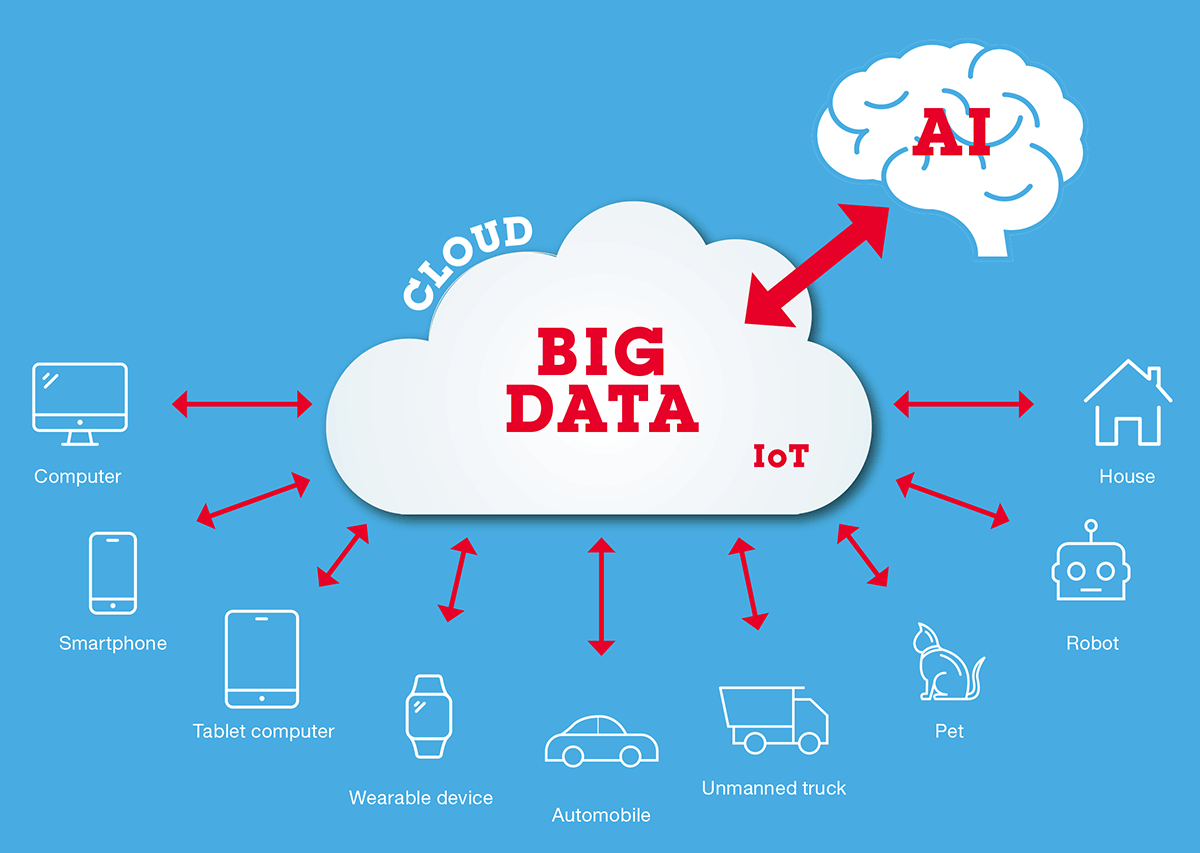
Cloud AI and Big Data are transforming industries by enabling scalable, intelligent, and data-driven solutions. Cloud AI refers to artificial intelligence services hosted on cloud platforms like AWS, Google Cloud, and Microsoft Azure. These services provide machine learning (ML) models, natural language processing (NLP), computer vision, and other AI capabilities without requiring on-premises infrastructure. Businesses use Cloud AI for automating workflows, enhancing customer experiences, and improving decision-making through predictive analytics. Since AI requires large datasets for training and optimization, cloud computing provides the necessary computational power and storage to handle massive amounts of data efficiently.
Big Data refers to the vast volume of structured and unstructured data generated from various sources such as social media, IoT devices, sensors, and enterprise applications. Cloud computing plays a crucial role in managing Big Data by offering storage, processing, and analytics solutions. Cloud-based Big Data platforms like Apache Hadoop, Apache Spark, and Google BigQuery allow businesses to extract valuable insights from data at scale. With real-time data streaming and AI-driven analytics, organizations can identify patterns, trends, and correlations to make informed decisions and gain a competitive advantage.
The integration of Cloud AI and Big Data has revolutionized industries such as healthcare, finance, retail, and manufacturing. In healthcare, AI-powered cloud solutions help analyze patient records to predict diseases and recommend treatments. In finance, AI-driven fraud detection systems process large-scale transaction data in real-time. Similarly, retailers use AI analytics to understand customer behavior and personalize shopping experiences. As Cloud AI and Big Data continue to evolve, they will drive innovation, automate complex tasks, and create smarter, more efficient business models across various domains.
.........
Click here for more information
Comments